Periodontal practices were built on referrals from general dentists. That base still matters, but it is thinning: more GPs place implants and treat early gum disease in-house, and more patients now search for implants and gum treatment on their own. We help periodontists win those direct patients while protecting the referring relationships that built the practice, and we track both so you can see which one is growing.






Periodontist marketing is the work of bringing a periodontal practice new cases from two sources at once: general dentists who refer, and patients who search directly for implants or gum disease treatment. It combines local SEO, Google Ads, a procedure-led website and a referral programme, and it is measured in consults and case starts, split by referred and self-referred patients.
General dental marketing assumes one audience and one kind of patient. A periodontal practice has neither, and the campaigns have to account for both.
A periodontal practice markets to patients and to the general dentists who refer them. The two need different messages, and marketing to one can damage the other if it is done carelessly.
Direct-to-patient campaigns built to sit alongside your referral relationships.
A hygienist flags gum disease and the patient discovers it. Implants are different: patients compare three or four providers over weeks, often against advertised full-arch prices.
Separate single-tooth and full-arch campaigns, led by the specialist argument.
Most people with gum disease don't know the word periodontist until someone refers them. They search "bleeding gums" or "receding gums," not "periodontics."
Content built around the condition, then leading to the specialist.
Patients choosing a specialist want to know the training, the technology and the outcomes. Generic dental marketing language undersells what makes a periodontist different.
Qualifications, procedures and real reviews, not broad claims.
Each one needs something different before they call. Pick one to see what we build for them.
A plain-language explanation, what happens if they wait, honest cost ranges and no shame.
Condition pages and symptom-led SEO
Credentials, reviews, what the first visit involves and an easy way to book.
Doctor bio, Google Business Profile, reviews and a referred-patient page
Specialist credentials, real cases, financing options and the treatment plan.
Implant campaigns, full-arch landing pages and remarketing
"Periodontist near me" alone is not a strategy. We plan content and campaigns across four kinds of search.
| Search type | Example searches | Page it lands on | Main channel |
|---|---|---|---|
| Specialty and local | periodontist near me, gum specialist [city], periodontist [city] | Homepage, location page, Google Business Profile | Local SEO, GBP, search ads |
| Symptom | bleeding gums, receding gums, loose tooth adult, gum pain | Condition pages | SEO |
| Procedure | scaling and root planing, gum graft, LANAP, osseous surgery, bone graft for implant | Procedure pages | SEO and search ads |
| Cost and comparison | gum graft cost, implant vs bridge, full mouth implants cost | Cost and comparison pages | SEO, search ads and remarketing |
Built on our Dental Google Ads, Dental SEO and Facebook Ads work, and on our Dental Implant Marketing, adapted for periodontal practices.
Single-tooth and full-arch implants run as separate Google Ads campaigns, each with its own landing page, budget and conversion goals. Blending them means paying full-arch click prices for single-tooth intent. Positioning leads with specialist training.
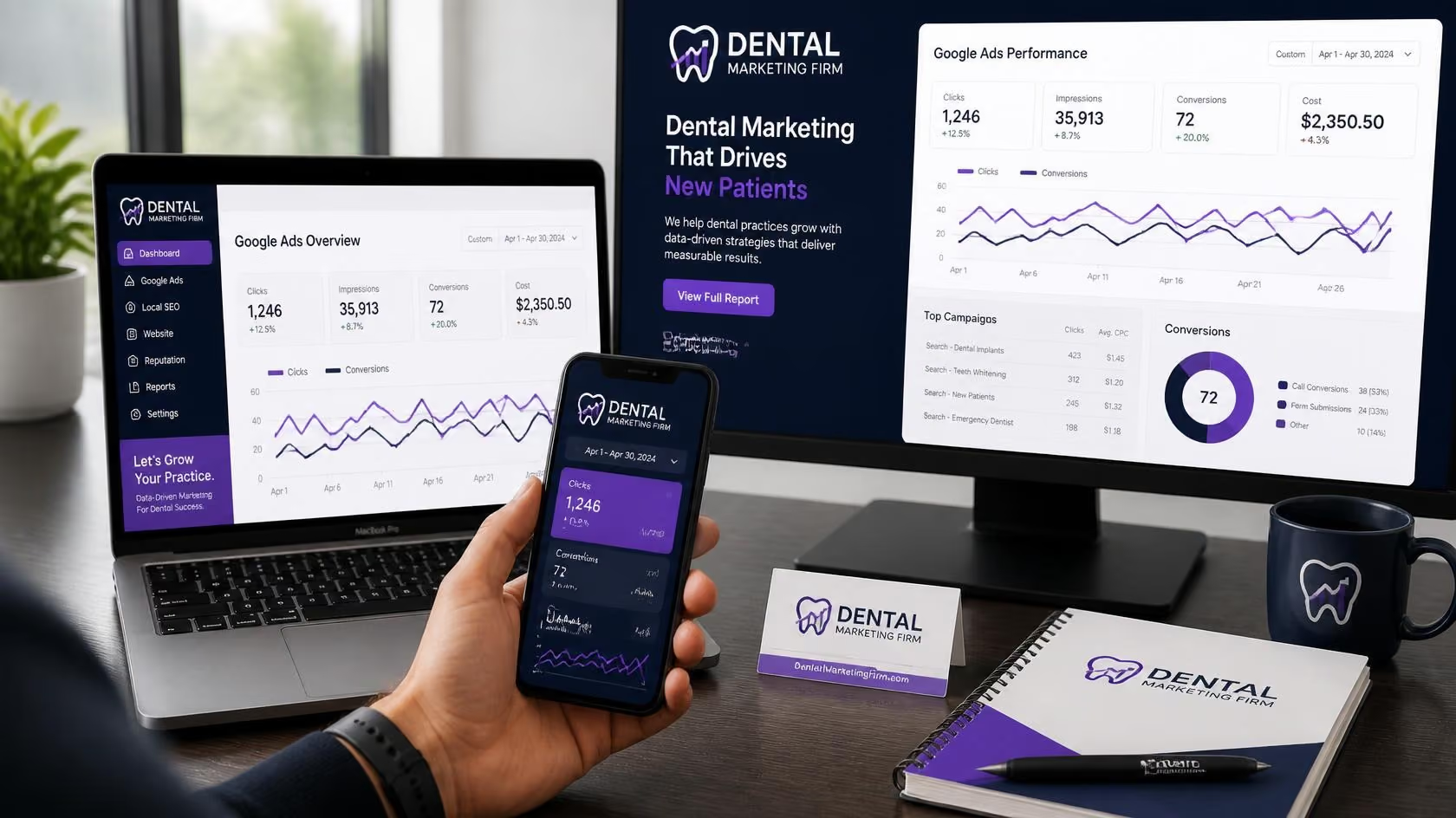
Pages for the searches patients actually make: bleeding gums, gum recession, loose teeth and the stages of gum disease. Each one explains the condition in plain language, then leads to the specialist.
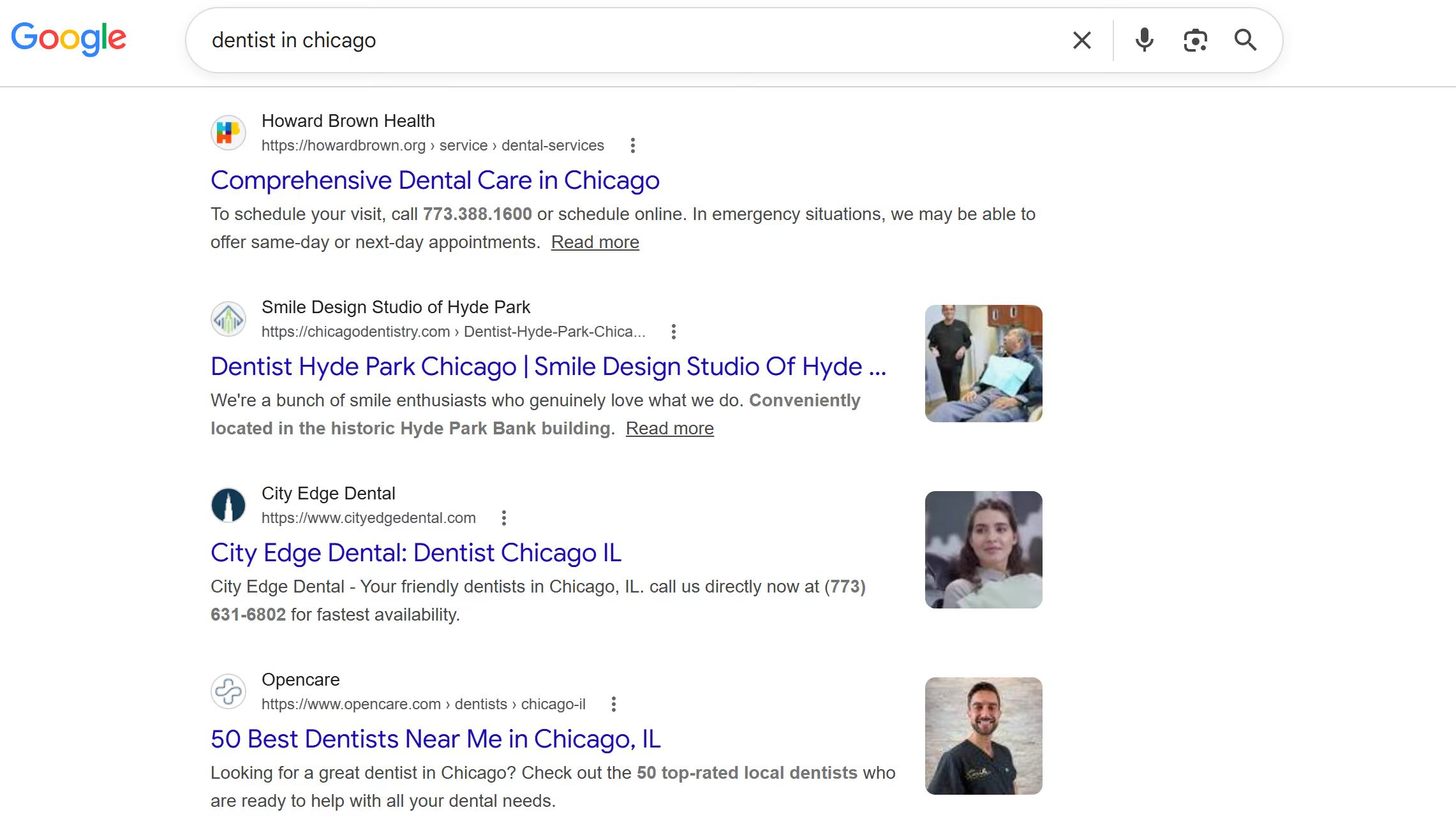
One page per procedure you offer: scaling and root planing, osseous surgery, LANAP, gum grafting including pinhole technique, crown lengthening, bone grafting, sinus lifts and peri-implantitis treatment. Each covers what it involves, recovery and honest cost ranges.
Ads stay on procedures general dentists refer out anyway: surgical periodontics, grafting and implant placement. Nothing that overlaps with restorative care or hygiene. We also build a referring-dentist page, an online referral form and a monthly report of referrals by office.
Primary category set to Periodontist where a periodontist practises at the location, with secondary categories for the services you provide and reviews asked for at the post-op check. Listed as a general dentist, the practice competes in the same local results as every general practice in town.
Bleeding or receding gums? A periodontist treats the cause, not just the symptoms. Book a consultation with a specialist.
Call tracking, missed-call follow-up and form alerts, because an implant enquiry that waits a day often books elsewhere. Consults and case starts are imported back into Google Ads, so bidding optimises toward treatment, not form fills.
Referral volume isn't loyalty. It erodes quietly: a new associate brings their own perio contact, or a DSO buys a referring office and installs an in-house specialist. Direct marketing should add to referrals, not replace them.
Specialty advertising carries rules a general dental agency often misses. We write within them from day one.
We use "periodontist" and "board-certified" only where the credentials support them, and we check your state dental board's advertising rules.
We say what treatment involves and what it can achieve, not that gum disease is "cured" or "reversed."
Before-and-after images and reviews are used only with signed patient authorisation that covers marketing use.
Campaigns are built to pass Google and Meta healthcare policies, so ads and landing pages are not disapproved mid-campaign.
Clicks and impressions are context. These are the numbers we report on first.
| Metric | Why it matters |
|---|---|
| New patients, referred vs self-referred | Shows whether growth is coming from both engines, or one is quietly replacing the other |
| Referrals by office, month on month | Catches a drifting referrer while the relationship can still be recovered |
| Cost per consult, by procedure | Implants, gum treatment and grafting have very different economics |
| Consult-to-case acceptance | Separates a lead-volume problem from a conversion problem |
| Calls answered and speed to lead | High-value enquiries are lost at the front desk more often than in the ads |
Our published case studies are general and multi-location practices. The same rebuild method, with procedure-intent campaigns, cut waste and case-level tracking, is what we apply to periodontal practices.
A three-location practice in Columbus with a dormant ad account, rebuilt from scratch. It produced 317 patient leads in its first ten weeks at $19.74 each.
Book Your Free Exam CallRead the full case study →
A cosmetic-led practice paying $83.59 per enquiry. Rebuilt around procedure intent with the wasted search terms cut, cost per enquiry fell to $10.39 while volume rose from 15 to 423.
Book Your Free Exam CallRead the full case study →Thirty minutes to understand your practice, goals and gaps. No pitch, just honest diagnosis.
We audit your ad account, rankings, GBP category and reviews, plus your case mix and, if you share it, your referral-source report. Then we deliver a roadmap.
Campaigns built, tracking installed, creative ready. You stay focused on patients.
Live within fourteen days. Ongoing optimisation compounds every month.
Abdullah led our digital strategy across Google Ads, Facebook Ads, SEO, and website CRO. The campaigns became far more efficient and we started generating significantly more qualified patient enquiries.
Abdullah took control of our Google and Facebook campaigns, SEO, and website conversion strategy. His attention to detail and constant optimization made a huge difference.
Abdullah led our SEO, Google Ads, Facebook Ads, and website CRO strategy, and the difference was clear. Our campaigns became more focused and our website converted better.
Rated 4.8 / 5 as a Certified Semrush Agency Partner.

I'm Abdullah Asim. Over ten years building patient pipelines for dental practices, and a firm that takes on a limited number at a time — partly for attention, partly because we will not run ads for two practices competing for the same catchment.
Still have one that isn't here? Ask it on the call — it's thirty minutes and there's no pitch deck.
It doesn't have to. The risk comes from ads that read like a general practice pitch for cleanings or cosmetic work. We keep campaigns to procedures dentists refer out anyway: surgical periodontics, grafting and implants. We also suggest you tell referrers that restorative care goes back to them.
Usually implants, because they carry the highest case value and the most direct search demand. Gum disease treatment is often second, reached through symptom searches rather than the word "periodontist."
No. They attract different patients, cost different amounts per click and need different landing pages. Blending them means paying full-arch click prices for single-tooth intent, and reporting an average that tells you nothing.
It depends on your case mix, your market and how many new consults you can actually fit in. We size a starting budget to produce enough consults to judge within 60 to 90 days, then scale what converts. We'll model it with your numbers on the call.
Most need both. Google Ads reaches patients ready to book now, especially for implants. SEO and your Google Business Profile build the lower-cost visibility that compounds, and they support the referred patients who look you up before calling.
Paid search can produce enquiries within weeks of launch. Google Business Profile and review improvements usually show over the following months. Procedure and symptom pages typically take several months to rank, depending on your market and your site's history.
If a periodontist practises at that location, set the primary category to Periodontist and add secondary categories for the other services you provide. Listing as Dentist puts you in the same local results as every general practice in town.
We recommend honest ranges and an explanation of what drives the cost. Patients ask about cost first. A range filters out people who were never going to proceed, and it builds trust with those who will.
If you offer them, yes. Branded procedures are searched directly by some patients, often late in their research, and they give a concrete reason to choose a specialist.
AI assistants build answers from your website, reviews, Google Business Profile and directory listings. Clear procedure pages, consistent listings, a strong review profile and structured data give them enough to describe your practice accurately.
Yes. Angha Perio is one of the practices we work with. We also bring implant and procedure-intent campaign experience from our general and multi-location dental clients.
No. We will not run marketing for two practices competing for the same patients in the same area.
We also build Dental Implant Marketing, Invisalign Marketing, Orthodontist Marketing, DSO Marketing, and run campaigns in 12 US Markets.