Most agencies hand a dentist a menu and let them guess. We start with what your practice actually needs first, in what order, and at what budget. Then we run only the channels that earn their place.
We are proud to be recognized for delivering marketing that helps dental practices grow. Our commitment to creative quality, measurable results, and exceptional client service has earned us industry recognition and the trust of dental professionals across the country.
Google Partner
Meta Business
SEMrush Agency
HubSpot Gold
Webflow PartnerMost practices assume more traffic is the answer. Usually the traffic is already there and it is draining out somewhere between the search result and the appointment book. Here is where it goes.
Every one of these works. Not every one works for you, right now, at your budget. The honest version of this list includes when not to buy each thing.
Organic rankings and map pack visibility for the searches happening in your area every day.
Paid search for patients typing the exact treatment you want more of, today rather than next quarter.
Organic content, community management, and reputation. The channel that decides whether a patient trusts you once they have found you.
Paid Meta campaigns that reach patients before they start searching. Where demand gets created rather than captured.
The multiplier. Every other channel sends people here, so a weak site quietly taxes everything else you spend.
The highest-intent surface in dentistry. Most practices leave their profile half-finished and lose the map pack on details.
A brand new practice and an established one in a saturated market need almost opposite things first. This is roughly how we sequence it, before we know anything specific about you.
| Your situation | Start here | Add next | Later |
|---|---|---|---|
| Brand new practice, no patients yet | Google Ads | Local SEO | SEO, Social |
| Established, schedule has gaps | Local SEO | SEO | Paid social |
| Saturated metro, high competition | Web design | Google Ads | SEO |
| Want more implants or full-arch | Google Ads | Meta Ads | Social proof |
| Want more ortho or cosmetic | Meta Ads | Social | SEO |
| Multi-location group or DSO | Local SEO | Web design | Paid, per site |
| Traffic is fine, bookings are not | Web design | Front desk | More traffic |
That last row is the one practices argue with most, and it is the one we are most confident about. If people are already finding you and not booking, buying more traffic multiplies the leak instead of fixing it.
Ad spend and management fees are different things, and most practices only budget for one of them. These are the splits we typically recommend, before adjusting for your market.
Single location, early stage, or recovering from a quiet stretch.
Established practice with steady flow, competing on more than price.
Multi-location, DSO, or a practice pushing high-value case types.
Independent benchmarks put the cost of acquiring a new dental patient somewhere between roughly $150 and $400 depending on market and channel, with major metros at the high end. Whatever you spend, the split matters less than knowing which channel produced which patient.
This is the argument for consolidating, and it is also the reason agencies that only sell one thing will tell you that one thing is enough.
Nothing wrong with any of these. They just stop improving at a point, and the point arrives sooner than practices expect.
These effects are real, measurable, and only available if the same team can see all the channels at once.
Practices call us asking whether they should do SEO or Google Ads. It is the wrong frame. The right question is what a new patient is worth to you, and what you can afford to pay for one.
Once you know that number, the channel choice mostly answers itself. A practice where the average patient is worth $600 over their lifetime cannot afford the same acquisition cost as one built around implants and full-arch cases. Same town, same competition, completely different correct strategy.
That is the first thing we work out, and it is why our recommendations sometimes involve selling you less than you came in asking for.
Get Your Free Marketing DiagnosisNo channel work happens in the first two weeks. That is deliberate, and it is the part that separates a plan from a package.
We audit the full path from search to booked appointment, including the parts that are not marketing. Call handling, booking friction, and review position all get scored.
Average patient value, current acquisition cost if it is knowable, and the maximum you can afford to pay for a new patient. Everything downstream is built on this.
A sequenced recommendation with channels ranked, plus an explicit list of what we are deliberately leaving out and why. You approve before anything is built.
Tracking goes in first, always. Then the first channel launches, on its own, so its performance is unambiguous.
Second and third channels come on once the first has a baseline. Monthly reporting ties every enquiry back to source.
Quarterly review where any underperforming channel gets fixed or dropped. We would rather lose a line item than defend one.
Both engagements below are Google Ads. Figures come from the named accounts over the reporting windows shown, published with client permission.
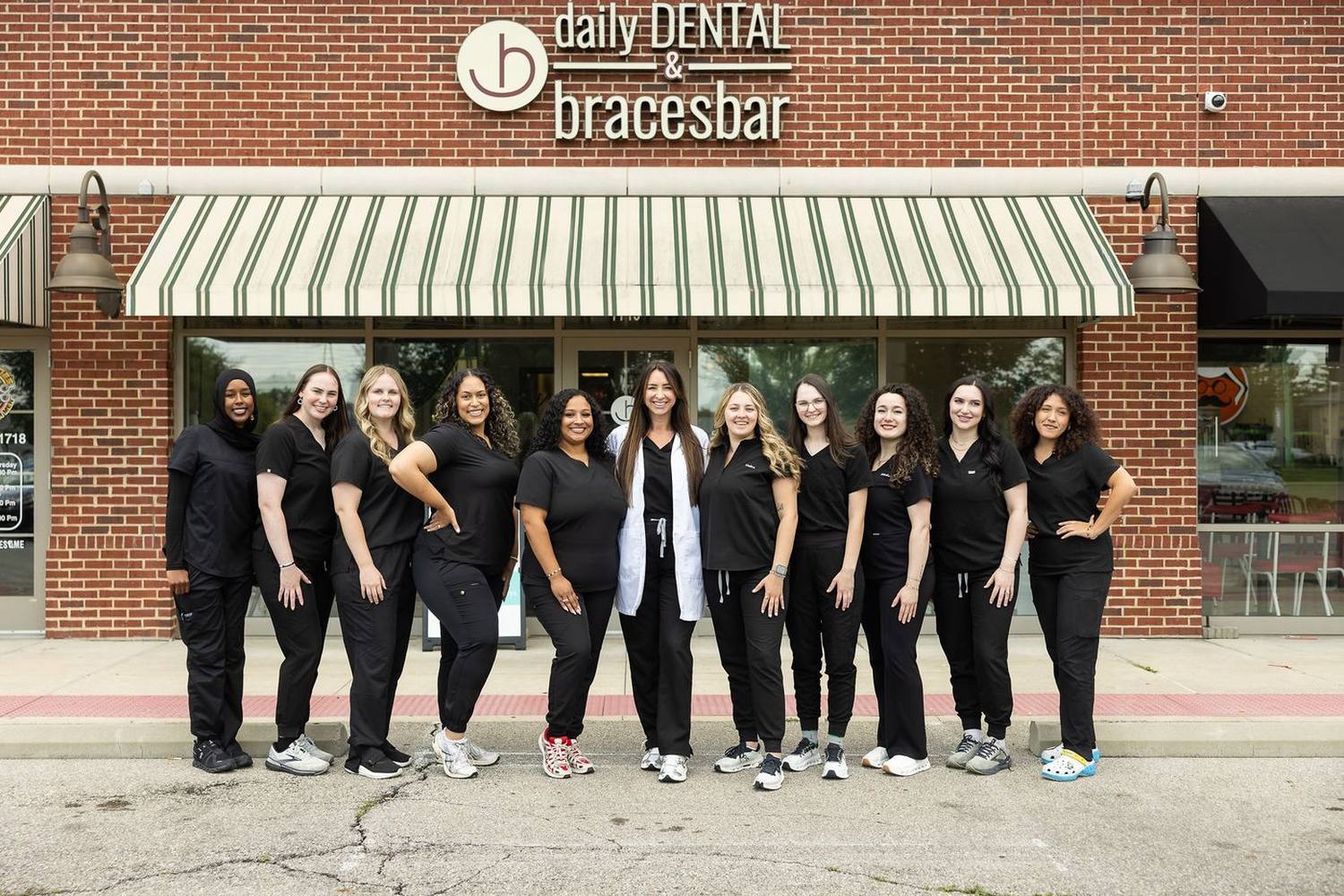
A three-location practice in Columbus with a dormant ad account, rebuilt from scratch. It produced 317 patient leads in its first ten weeks at $19.74 each.
Book Your Free Marketing ExamRankings, impressions, followers, and clicks are diagnostics. They explain the number. They are not the number.
Plenty of good agencies will take a dental account. The difference shows up in the parts of the job that only exist in healthcare.
| Feature | US | General Agency |
|---|---|---|
| Works with dental practices only | ✓ | ✗ |
| Will recommend fewer services than you asked for | ✓ | ✗ |
| Reports cost per booked patient by channel | ✓ | On request |
| Understands patient consent and advertising rules | ✓ | ✗ |
| Audits call handling, not just traffic | ✓ | ✗ |
| Per-location structure for groups and DSOs | ✓ | Partial |
| Quarterly cycle that can drop a channel | ✓ | ✗ |
Broadly six things: organic search, paid search, paid social, organic social and reputation, website design, and local search including your Google Business Profile. A good engagement uses two or three of them at a time, sequenced, rather than all six at once.
The useful version of this question is what a new patient is worth to you. Independent benchmarks put acquisition cost between roughly $150 and $400 depending on market and channel. If your average patient lifetime value is five times your acquisition cost or better, the spend is working. Below that, the problem is usually conversion rather than budget.
If you need patients this quarter, Google Ads. If you are building something that gets cheaper over time, SEO. Most practices should run both eventually, and the paid data makes the organic work faster because you learn which terms convert before committing months of content to them.
Almost certainly not, and we will tell you which ones to skip. Spreading a modest budget across six channels produces six underfunded channels. Two run properly will beat all six run thinly, every time.
Facebook and Instagram Ads are paid campaigns that reach people who are not following you and were not searching. Social media marketing is the organic side: content, community management, replying to messages, and turning reviews and patient goodwill into visible proof. They work well together and they are billed and measured separately.
Paid search can produce enquiries in the first month. Paid social usually within two months. Local SEO shifts in one to three months. Organic SEO and social both take six months or more before they contribute consistently. Any agency compressing those timelines is describing a best case as a promise.
Yes. Groups need account and listing architecture decided before any campaign work, so each location builds its own local presence rather than competing with its siblings for the same searches. That structural work comes first.
That is how we prefer to work. One channel launches on its own so its performance is unambiguous, then the second layers on once there is a baseline. Starting with four channels at once means you never learn which one worked.
A free diagnosis covering your search visibility, website conversion, call handling, and competitive position. No obligation, and we will tell you if the answer is to spend less.