No dentist prescribes before an exam. We don't launch campaigns before one either. As a dental Google Ads agency working exclusively with dental practices, we diagnose where your budget is leaking, prescribe the campaign structure that stops it, and track every click through to a patient who actually sits in the chair.
Rx: Offline conversion import so bidding optimizes to revenue, match type discipline, and a live negative keyword list. Reviewed weekly, not quarterly.
We're a certified Google Partner, and we earned that status running paid search for dental practices specifically, not for a general roster where dentistry is one vertical among thirty. Our commitment to measurable results and honest reporting has earned us industry recognition and the trust of dental professionals across the country.
Both engagements below are Google Ads. Figures come from the named accounts over the reporting windows shown, published with client permission.
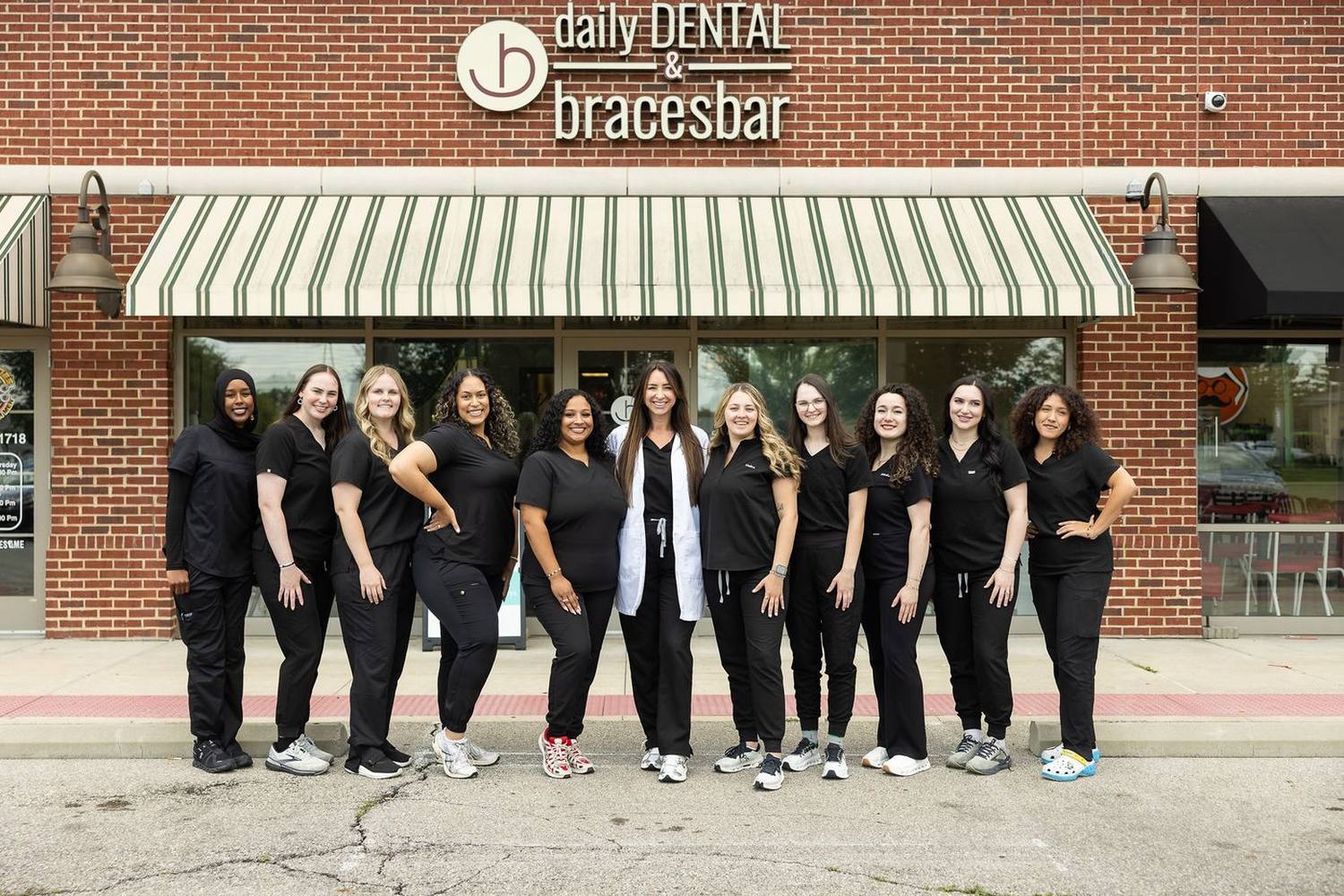
A three-location practice in Columbus with a dormant ad account, rebuilt from scratch. It produced 317 patient leads in its first ten weeks at $19.74 each.
Book Your Free Account ExamMost practices running Google Ads aren't underspending. They're overpaying for clicks that were never going to book. This is what a typical $3,000 month looks like before we touch the account.
Your ads served for "dental assistant jobs," "free dental clinic," and "dentist salary." Google spends the budget whether or not the searcher could ever become a patient.
Radius targeting set to the whole metro instead of the drive time patients will realistically accept for a cleaning.
People comparing careers or reading about a procedure, clicking the same ad as a patient in pain, at the same price.
The ad promises Invisalign. The page opens on a general homepage with eleven other links. The click is paid for either way.
In dentistry the conversion is a phone call. If those calls never reach Google Ads, smart bidding is optimizing toward the wrong outcome using your money.
Thirty-eight cents on the dollar. Everything above it is recoverable without adding a single dollar of budget.
Thirty-eight cents of every dollar reached someone who could book. That gap, not your budget, is almost always the reason PPC for dentists gets written off as too expensive.
The top of a dental search result is not organic anymore. Four paid slots and Local Service Ads sit above the map pack, and the first organic listing frequently falls below the fold on a phone. Buying that space is the entire point of Google Ads for dentists, and it is the one position SEO cannot reach at any price.
Intent is the second half of it. Someone typing "emergency dentist near me" at nine on a Sunday night is not researching. They are booking within the hour, and the practice they call is usually the first one they can see. That is a fundamentally different visitor from a social media impression or a mailer.
Speed is the third. SEO compounds over six to twelve months and keeps paying afterward. PPC advertising for dentists puts your practice in front of that patient tomorrow morning. Most practices should run both, but only one of them fills a chair next week.
See What Your Market Costs Per ClickEvery account we build runs the same campaign architecture. Nothing gets dumped into a single campaign hoping the algorithm sorts it out, because it doesn't, and you pay for the experiment.
Protects your practice name from competitors bidding on it. Cheapest clicks in the account, highest conversion rate of anything you run.Directions: continuous, exact match, low ceiling
"dentist near me," "family dentist [city]," "new patient dentist." The volume engine of the account and the campaign most likely to leak if left unattended.Directions: phrase and exact only, daily search term review
Separate campaigns per procedure: implants, Invisalign, veneers, sedation. Each gets its own budget, landing page, and bid strategy.Directions: one campaign per treatment, never combined
The highest intent in dentistry. Runs with extended hours, call-only ad variants, and location extensions so a patient in pain can reach you in one tap.Directions: extended schedule, call-only variants live
Bids on nearby practice names. Lower conversion rate by design, so it runs with a strict ceiling rather than an open budget.Directions: capped spend, monitored weekly
The Google Screened placement that sits above everything else on the page. We handle verification, budget, and disputing leads that were never patients.Directions: verification maintained, leads disputed monthly
Recovers the majority who visited your site and left without calling. Frequency capped so patients are not followed around the internet for months.Directions: 30-day window, frequency capped
In dentistry the conversion is a phone call to the front desk, not a checkout button, and the patient on the other end is worth anywhere from $180 to $22,000. Google Ads cannot see either fact on its own.
"emergency dentist near me"
The unique click ID lands with them
The ringing phone is tied to the exact term
Appointment marked in your system
The booking and what it is worth go back to Google Ads
Budget moves toward high-value treatments on its own
Left alone, Google Ads sees a click and then nothing, so it optimizes toward the only signal it has: form fills, or worse, clicks themselves. Offline conversion import closes that loop. We upload booked appointments and the production value attached to them back into the account, so smart bidding is competing for revenue rather than counting leads.
This is the single most common thing we repair in an inherited account. It is usually the real reason the previous PPC company for dentists could not scale spend without cost per lead climbing: the account was optimizing hard toward the cheapest conversions available, and the cheapest conversions in dentistry are rarely the profitable ones.
A $45 click that books an implant consult is inexpensive. The same $45 click for a routine cleaning is not, and a campaign that treats them identically will quietly lose money for a year.
We build bids around what the chair is actually worth, which is why PPC ads for dentists need treatment-level campaign separation rather than one catch-all budget with a single target cost per lead sitting on top of it.
The table beside this is also exactly why offline conversion import matters. Without case value flowing back into the account, every one of these treatments counts as a single identical conversion, and a well-meaning campaign will quietly optimize toward the cheapest, least valuable patient it can find.
Model This For My PracticeEmergency visits carry a low first-visit value but among the highest lifetime values in dentistry, which is why they are bid on separately. Ranges vary by market and insurance mix. We model yours during the account exam.
Google does not know your Westside and Downtown offices are the same company. It only sees two advertisers competing for the same search, and it charges both of you for the privilege.
Both campaigns enter the same auction. Your own offices drive up your cost per click and split the conversion data between them.
Each office competes only against actual competitors, with budget allocated by which chairs have open capacity.
The fix is rarely a bigger budget. It is geo-segmentation by realistic drive time, distinct location extensions and landing pages per office, and budget allocated by chair capacity rather than split evenly. Groups running one campaign across ten locations almost always overspend in their strongest market and starve the newest one.
Paid search moves faster than SEO, but it is still not instant. Anyone promising a full schedule in week one is selling you the learning phase as a result.
Full audit, market cost per click research, and conversion tracking rebuilt before a single ad runs.
Campaign architecture, ad copy, negative lists, landing pages. First click goes live.
Google gathers data. Deliberately light-touch: changing bids here resets the algorithm.
Hands off on purposeWeekly search term reviews, negative list expansion, budget shifted toward campaigns that book.
Winners get more budget. Bid strategy graduates to target CPA once volume supports it.
A cheap click that never books is expensive. We report the whole chain, ending at the only number that pays for the program.
That last line matters more than most agencies admit. Paid search delivers a ringing phone. If nobody answers it after five, the campaign gets blamed for a front desk problem. We report call recordings and answer rates alongside the ad metrics so you can see exactly where a patient was lost.
See a Sample ReportThey are not competing line items. They cover different parts of the same schedule.
Most practices we work with start with paid search to stabilize new patient flow, then layer SEO underneath so the cost per patient drops over time. If you're weighing the two, our dental SEO services page covers the other half in the same detail.
Plenty of agencies will take a dental account. Very few work as a PPC agency for dentists exclusively, and the difference shows up in the search terms report.
| Feature | US | General Agency |
|---|---|---|
| Dental-only focus | ✓ | ✗ |
| Call tracking on every campaign | ✓ | Partial |
| Offline conversion import from your practice management system | ✓ | ✗ |
| Bidding to revenue, not lead count | ✓ | ✗ |
| Weekly search term and negative keyword review | ✓ | Partial |
| Flat management fee, not a percent of spend | ✓ | ✗ |
| Landing page per treatment, not the homepage | ✓ | ✗ |
| Local Service Ads managed in-house | ✓ | Partial |
| You own the ad account and the data | ✓ | ✗ |
| Honest timelines, no week-one promises | ✓ | ✗ |
As a dental PPC company we know a single-location startup and a six-office group need different accounts, not the same one with a bigger budget.
For a single-location practice getting paid search running properly for the first time.
For a practice ready to compete for every high-value treatment in its city.
For DSOs and groups where offices are currently competing with each other.
A dental Google Ads agency builds and manages paid search campaigns exclusively for dental practices. The distinction matters because dental conversions happen on the phone rather than online, competition is hyperlocal, and the value of a new patient ranges from under two hundred dollars to over twenty thousand depending on treatment. A generalist agency running the same playbook it uses for e-commerce will optimize toward the wrong signals.
Most single-location practices see meaningful results somewhere between $1,500 and $5,000 per month in ad spend, depending on how competitive their city is and which treatments they're promoting. Implant and Invisalign keywords cost considerably more per click than general dentistry. We model realistic spend against your market's actual cost per click during the free account exam rather than quoting a number blind.
We charge a flat monthly management fee rather than a percentage of ad spend, because a percentage model rewards an agency for spending more of your money. Fees scale with the number of campaigns and locations. Every engagement is scoped after the account exam so you're paying for the work your account actually needs.
Ads can be live within two weeks of starting, and first calls typically arrive in the days after launch. What takes longer is efficiency: the account needs about 30 days in Google's learning phase, then another 30 to 60 days of search term refinement before cost per booked patient settles. Anyone promising a full schedule in week one is describing the learning phase, not a result.
Yes, through offline conversion import. By default Google Ads counts every conversion equally, so a routine cleaning and a full arch case both register as one conversion and bidding chases whichever is cheapest. When booked appointments and their case values are uploaded back into the account against the original click ID, smart bidding can target return on ad spend rather than cost per lead, and it will move budget toward high-value treatment searches on its own. This requires booked and accepted case data to come out of your practice management system on a regular schedule, which is a genuine operational commitment rather than a switch an agency flips.
It depends entirely on the treatment. A general dentistry patient acquired for $80 to $150 is healthy in most markets. An implant or full-arch consult can justify $300 or more per booked appointment given the case value. The only way to judge this properly is to track bookings back to the campaign, which is why conversion tracking comes before optimization.
Yes. Local Service Ads sit above standard paid search results and carry the Google Screened badge, which matters a great deal to patients choosing a healthcare provider. We handle verification, budget management, and disputing leads that were never genuine patients.
They solve different problems. Google Ads for dentists buys immediate visibility and can be running in two weeks, but stops when the budget stops. SEO takes six to twelve months and compounds, and it is the only way to win the map pack. Practices needing patients this quarter start with ads. Practices building a durable cost advantage run both.
No. We won't run PPC for two practices bidding against each other in the same market. It drives up cost per click for both and makes it impossible to genuinely represent either one's interests.
Yes. The account is created under your practice, and you retain full ownership, historical data, and admin access whether or not you continue working with us. Conversion history is one of the most valuable assets a mature account has, and it should never be held hostage.
They are the same platform. Google renamed AdWords to Google Ads in 2018, but many dentists still search for Google AdWords for dentists out of habit. Any agency describing itself as a Google AdWords agency for dentists is talking about the same product.
Get a free exam of your Google Ads account, your conversion tracking, and the search terms you're actually paying for. No obligation, just a clear read on where the budget is going and what it would take to fix it.