Dentistry has the highest cost per lead of any industry on Facebook. Any agency quoting you twenty-five dollars a lead is either measuring something else or has not run the campaigns. Here is what it actually costs, and what it takes to make the numbers work anyway.
%20(500%20x%20100%20px)%20(1).png)


We are proud to be recognized for delivering marketing that helps dental practices grow. Our commitment to creative quality, measurable results, and exceptional client service has earned us industry recognition and the trust of dental professionals across the country.
Get Your Free Paid Social Audit.png) Google Partner
Google Partner.png) Meta Business
Meta Business.png) SEMrush Agency
SEMrush Agency.png) HubSpot Gold
HubSpot Gold.png) Webflow Partner
Webflow PartnerBoth engagements below are Google Ads. Figures come from the named accounts over the reporting windows shown, published with client permission.
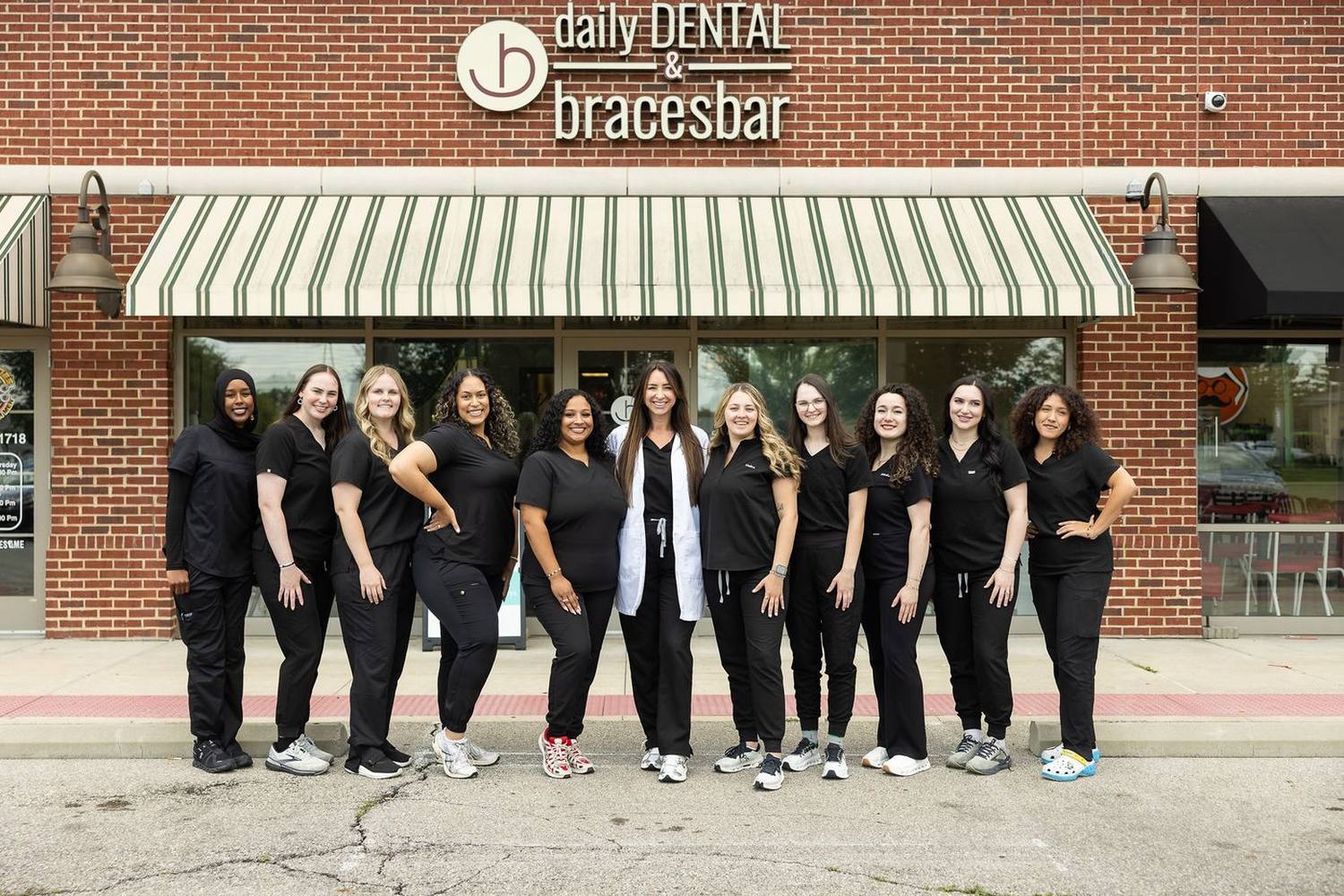
A three-location practice in Columbus with a dormant ad account, rebuilt from scratch. It produced 317 patient leads in its first ten weeks at $19.74 each.
Get Your Free Paid Social AuditWhen LocaliQ and WordStream published cost per lead benchmarks for Facebook lead campaigns across every measured industry, dental sat at the very top of the table. Above health and fitness. Above beauty. Above everything.
The most common reason a dental Meta account gets switched off at month three is that it was judged against a search benchmark it was never going to hit.
Someone already has the problem and is typing it into a search bar at eleven at night.
Nobody opens Instagram looking for a dentist. You are interrupting a scroll, and you have about a second to earn the pause.
This is the arithmetic almost nobody walks you through before they take your card. Worked example, one location, realistic conversion rates.
Both work. They fail in different ways, and the right choice comes down to whether your front desk has the capacity to chase.
The form opens inside Facebook. Name, phone and email are pre-filled from their profile. Two taps and they are a lead.
The click leaves Meta for a page you control, with the offer, the practice, the reviews, the team, and a form they have to mean to fill in.
Dental has the lowest click-through rate of any industry on Meta. The creative is not a finishing touch here, it is the entire lever.
Not on the implant. The winning dental ads price the entry point, because that is the decision the viewer is actually making today.
Nobody cares that you have been serving the community since 1998. They care that chewing on one side has become normal.
The single most requested dental creative, and the one most likely to get an ad account restricted. There are compliant ways to imply the outcome. Tight mouth-only transformations are not one of them.
Fifteen seconds of the real room, the real chair and the actual dentist speaking will outperform stock photography by a distance. Phone footage is fine.
Meta’s personal attributes policy is strict and it is enforced by machine. Copy that implies you know something about the viewer’s health is a rejection.
Local dental audiences are small. Frequency climbs fast, performance decays, and the account looks broken when the only thing wrong is fatigue.
That classification is applied automatically and it is not negotiable. It restricts your audiences, your copy and your imagery. Most agencies discover this by getting the account restricted.
Direct second-person copy that asserts something about the viewer’s health. Meta reads this as a personal attribute claim.
The same idea framed as a general statement. Speak about the condition, never at the person who has it.
Close-cropped transformation imagery is the fastest route to a restricted ad account in this category.
Show the outcome as a person, in context, with consent on file. Wider crops clear review far more reliably.
Customer list audiences are limited for health advertisers, and uploading patient data brings HIPAA questions you do not want.
Engagement and website audiences remain usable and are usually the better retargeting pool anyway.
Shame-led angles trip both the personal attributes rule and the policy on implying negative self-perception.
Aspirational, non-diagnostic, and it converts better in dental anyway.
Health-related interest categories have been progressively removed from detailed targeting.
Give the algorithm a clean radius and a clear conversion event. In local dental that beats hand-built audiences.
A 1.05% click-through rate means Meta shows your ad to a hundred people to earn a single visit. Stack the highest cost per click of any industry on top of that and the expensive lead stops being a mystery. It is arithmetic.
Which is why the practices that win on Meta are not the ones with the biggest budgets. They are the ones with a sharp offer, creative that gets refreshed before it fatigues, and a front desk that returns calls the same hour. We can fix two of those three from the outside, and we will be honest with you about the third.
Get Your Free Paid Social AuditLocal dental audiences are small. Splitting a modest budget across a dozen ad sets starves every one of them of the data Meta needs to optimise, and the account never leaves the learning phase.
Broad targeting inside a tight radius, one clear entry offer, and enough creative variants that fatigue never takes the whole campaign down at once.
Video viewers, page engagers and site visitors. This is where price, nerves and insurance get answered, and where the cheapest booked appointments in the account come from.
Patients who have not been in for eighteen months are the cheapest chair-fillers you own. Handled within Meta’s health category rules, without uploading anything you should not.
No agency turns a dental Meta account around in a fortnight. Anyone who promises that is selling you the learning phase as a result.
We go through the existing account, the pixel, the lead routing and the phone handling. You get the findings whether or not you hire us.
Campaigns built, conversions API configured, call tracking connected. Nothing goes live until a lead can be traced from ad to appointment.
Spend goes out, creative gets tested, cost per lead is unstable and that is normal. We do not touch budgets every two days chasing noise.
Losing creative is cut, the winning angle gets variants, retargeting switches on with real audience volume behind it.
By now cost per booked appointment is readable. If the channel is not paying for your practice, we will say so rather than quietly keep billing.
If your current report leads with impressions and engagement, it is designed to be difficult to argue with rather than useful.
None of these are fake. They are just not evidence that the campaign paid for itself.
Four of these five come from outside the ad platform, which is exactly why most agencies do not report them.
| Generalist social agency | The Dental Marketing Firm | |
|---|---|---|
| Runs dental accounts exclusively | ✗ | ✓ |
| Knows Meta’s health category restrictions before the first rejection | Sometimes | ✓ |
| Reports cost per booked appointment, not just cost per lead | ✗ | ✓ |
| Tracks calls and forms through to the appointment | Forms only | ✓ |
| Will tell you paid social is the wrong channel for you | ✗ | ✓ |
| Who owns the ad account and pixel | The agency | You do |
| Minimum commitment | 6–12 months | Month to month |
For a single location, below roughly $1,500 a month you will not gather enough conversion data for Meta to optimise, and the account will sit in the learning phase indefinitely. Most single-location practices land between $1,500 and $3,000. Cosmetic and implant-focused practices typically need $3,000 and up, because the case value justifies it and the auction is more expensive. If a budget below $1,000 is all that is available, put it into Google Search instead. We would rather say that than take the retainer.
Three things compound. Dental has the lowest click-through rate of any industry measured, at around 1.05%, so Meta has to serve a great many impressions to produce one click. It also has the highest cost per click of any industry at roughly $9.78, against a $1.92 average. And local dental audiences are small, so frequency climbs and creative fatigues faster than in almost any other vertical. Multiply those together and $76.71 per lead stops looking surprising.
For most general practices, no. Search captures people who already want a dentist, and it books them faster. Meta earns its place when you have a specific high-value procedure to sell, such as Invisalign, veneers or implants, and the patience to let bookings lag the leads by several weeks. If you can only fund one channel, we will usually point you at Google Ads first and tell you when paid social becomes worth adding.
Carefully, and not in the form most practices want. Tight mouth-only transformation crops are among the fastest routes to a restricted ad account under Meta’s health and personal attributes policies. Wider frames showing a person smiling, with documented patient consent, clear review far more reliably. We handle the consent paperwork and the creative treatment as part of the build, because an ad account restriction costs more time than any single ad is worth.
Leads usually arrive in the first week. Booked appointments lag by two to six weeks, because you are advertising to people who were not looking for a dentist when they saw you. Judging the channel before day sixty is judging the learning phase. We report weekly throughout so you can see it forming rather than waiting in the dark, and by month three cost per booked appointment is readable enough to make a real decision on.
No. We work month to month, and you own the ad account, the pixel and every asset we build. The honest caveat is that leaving at week six means paying for the learning phase without collecting the return on it, so we will ask you to commit mentally to ninety days even though you are not committing contractually.
A free paid social audit: your cost per lead against the dental benchmark, where the leads are leaking, and whether Meta is the right channel for your practice at all.
.png)